
The Rise of Dark Romance: Where Is the Line?
Dark romance is the fastest-growing subgenre in fiction — and the most debated. Here's what it actually is, what it isn't, and the best 2026 H1 reads.
Dark romance didn't sneak up on publishing. It arrived the way a storm does — gradually and then all at once. In the first half of 2026, it has become the dominant conversation in romance fiction: on BookTok, in Goodreads group threads, in the increasingly heated comment sections of reader blogs. Entire dedicated hashtags, Discord servers, and reader newsletters have organised themselves around the subgenre. The shelves at every major bookstore now have an explicit dark romance section — something that would have seemed unlikely five years ago. Half the conversation is enthusiasm. The other half is the same question, asked in different ways: where is the line?
It's a fair question. It's also one that dark romance readers tend to answer with more precision than its critics expect. Understanding that precision — and what it tells us about how readers actually engage with morally complex fiction — is the more interesting story.
What dark romance actually is
The cleanest definition is also the most accurate one: dark romance is romance with heavier themes. The structure is the same as any romance novel — two people, real conflict, an earned ending. What changes is the territory the story walks through to get there. The heroes are morally grey at minimum and outright dangerous at worst. The heroines are in situations that carry genuine weight. The emotional stakes run higher because the obstacles are more extreme and the moral landscape less navigable.
None of that changes the ending. Dark romance still delivers a happily ever after. This is not optional or cosmetic. The HEA is the structural contract the reader signs before opening the book, and the best dark romance authors honour it without qualification. What the HEA earns its meaning from is the darkness that precedes it — the sense that these two people have crossed real terrain together, made real choices under real pressure, and arrived at love without either of them pretending the journey was simple.
The genre's most defining feature is its heroes. Dark romance heroes are not redeemed men who were secretly good all along. They are men who have done bad things and will, in many cases, do more bad things. What makes them heroes in a romance context is not moral absolution — it is transformation. The best dark romance is built around the specific emotional pleasure of watching a man who has held himself apart from the world be completely undone by one woman. The transformation is the point. The reader doesn't forgive the hero's darkness; she watches it yield.
It also matters what dark romance is not. It is not horror — the emotional register is catharsis through love, not dread. It is not literary fiction using trauma as decoration. It is not grimdark, where bleak endings are a feature rather than a violation of form. Dark romance exists inside the romance genre's fundamental promise. The darkness is the obstacle; love is still the answer.
What dark romance promises isn't a good man. It's a man who becomes good for one specific person. That's a different and in some ways more romantic story.
The heroine question
One of the most persistent misconceptions about dark romance is that its heroines are passive — women things happen to, rather than women who act. This misreads the genre at a fundamental level. The best dark romance heroines are among the most strategically competent women in popular fiction. They fight, calculate, endure, scheme, and adapt. What makes their choices harder and more meaningful is the extremity of the circumstances — not a diminishment of their agency but an amplification of its weight.
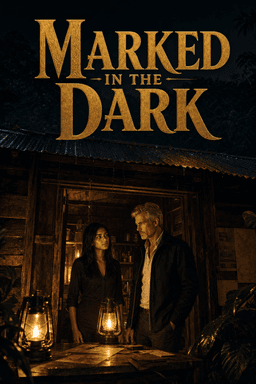
Anika Sharma in The Wrong Kind of War returns from captivity in Thailand with a revenge plan already running. She doesn't wait to be rescued. She dismantles her enemy's social and academic architecture with the patience of someone who has had months to think. Elena Vale in Beautiful Debt walks out the moment she discovers she's been managed without consent — even though walking out puts her in danger. Iris Castellano in Marked in the Dark engineered her proximity to the man she wanted for two years before the conference in Costa Rica, and when the institutional machinery turns against them both, she is the one who files first.
The heroine who survives on her own terms — not rescued but choosing, not broken but tested — is the central figure of 2026's best dark romance. This is not an accident. It reflects what readers have been asking for, and what the best authors have been delivering.
The line question
The debate around dark romance tends to collapse two separate things: what happens in the book, and what the book is sayingabout what happens. This is where most critics of the genre get it wrong, and where the reader community's own analysis is more sophisticated than it usually gets credit for.
Dark romance does not argue that stalking is romantic. It does not teach readers that obsession is love, or that coercion is flattering. What it does is use those dynamics as raw material for a story that has to earn its ending. The difference between dark romance done well and dark romance done badly is not the presence of morally complicated behaviour — it's whether the author is interrogating that behaviour or papering over it. A book that places the heroine in danger and then expects you to find the hero charming for causing it, without examination, is not doing what dark romance does at its best. It's a different and worse thing wearing the same label.
The tells are consistent across problematic dark romance: heroines with no interiority beyond their reaction to the hero; content warnings absent as a deliberate aesthetic stance rather than a genuine editorial choice; obsession framed as flattering by the narrative voice even when the character hasn't earned it. Readers notice all of this. The community critiques it openly, with specificity, and distinguishes it from books that handle the same tropes with craft.
“The line is craft. It's in whether the author is handling difficult dynamics with awareness and intention, or simply deploying them as aesthetic without consequence. Most of us know the difference when we read it. We've been articulating it in review threads for years.” — Goodreads Dark Romance community, June 2026
There is also the question of fantasy versus reality — which dark romance readers understand better than anyone. Reading about an obsessive hero in a novel is not the same as endorsing obsession in a relationship. Fiction has always been a space to safely explore the full range of human experience, including desire that would be unsafe or impossible in real life. Dark romance is unusual only in being asked, more than almost any other genre, to justify that it does this. Crime fiction is not expected to endorse murder. Thriller readers are not assumed to want to be kidnapped. Dark romance readers extend themselves the same courtesy, and resent having it denied.
What 2026 H1 has delivered
The first half of 2026 has been an exceptionally strong period for dark romance with that quality of craft. H.D. Carlton's My Dreadful Darling dominated BookTok from the moment it arrived in April — not simply because of its intensity but because of its psychological precision. Carlton writes obsessive heroes who are genuinely frightening and genuinely transformed; the heroines in her books always retain an inner life the narrative respects, which is the move that separates her work from the cruder end of the obsession subgenre.
Neva Altaj's Frozen Heart in May delivered the best arranged-marriage arc of her Perfectly Imperfect series — a book where the age-gap dynamic is examined rather than used as shorthand, and where the slow burn feels genuinely earned rather than structurally mandated. Rina Kent's Hunt the Villain and Sadie Kincaid's The Auction both pushed the boundaries of their respective tropes — villain romance and captivity romance — with heroines who remain fully present throughout.
The common thread across the year's standout releases is heroines who don't break. The era of the passive dark romance heroine is over. What readers are responding to in 2026 is women who navigate extreme circumstances with full agency — who choose, scheme, adapt, and survive. The darkness is in the circumstances, not in the heroine's capacity to act within them. Arranged marriage remains the dominant trope, particularly in mafia romance. The “protector becomes possessor” arc — where a hero's protection slides into something more complicated and the book examines that slide honestly rather than glossing it — is appearing in the year's most emotionally resonant writing. Dark romance in 2026 is asking harder questions and, in the best hands, answering them with more care than the genre has ever managed.
Best Dark Romance Reads
2026 H1 Picks
Some links below are Amazon affiliate links. ReadRom earns a small commission at no extra cost to you.
Obsessive Hero · Dark Romance
My Dreadful Darling
H.D. Carlton · Hollow Graves Duet #1 · April 15, 2026
The BookTok dominant of H1 2026. Carlton's signature obsessive hero at full intensity — psychologically dense, morally unsparing. The heroine navigates extreme circumstances without ever losing her interiority. One of the most crafted villain-coded heroes of the year.
Vibe: Obsessive · Psychological · Intense · Spice: 🌶🌶🌶🌶🌶 · CW: Obsession, captivity, violence
Buy on AmazonMafia Romance · Age Gap
Frozen Heart
Neva Altaj · Perfectly Imperfect #12 · May 30, 2026
Altaj's most emotionally precise arranged marriage entry yet. The age-gap power imbalance is examined rather than glossed over, and the mafia world continues to deepen. A slow burn that earns every degree of its heat.
Vibe: Slow Burn · Arranged Marriage · Mafia · Spice: 🌶🌶🌶🌶 · CW: Power imbalance, arranged marriage, violence
Buy on AmazonVillain Romance · Mafia
Hunt the Villain
Rina Kent · Kiss the Villain #2 · March 24, 2026
Kent pushes further into villain romance territory than any of her recent releases — darker hero, higher stakes, less resolution before the redemption arc earns it. The rivals dynamic runs at full intensity throughout.
Vibe: Villain Romance · Rivals · Mafia · Spice: 🌶🌶🌶🌶 · CW: Morally grey hero, violence, organized crime
Buy on AmazonDark Age Gap · Billionaire Romance
The Auction
Sadie Kincaid · Wages of Sin #1 · April 14, 2026
Beauty and the Beast by way of organized crime. The auction premise is handled with structural intelligence — Lincoln Knight is genuinely dangerous, and the age gap feels consequential rather than decorative. Slow-burn with scorching payoff.
Vibe: Age Gap · Captive Romance · Slow Burn · Spice: 🌶🌶🌶🌶🌶 · CW: Age gap, coercion, auction premise, violence
Buy on AmazonOn ReadRom
Read These Next
ReadRom Original
Marked in the Dark
Iris Castellano doesn't fall — she constructs. Two years of engineered proximity to Professor Adrian Keswick, and the book examines every degree of the power imbalance without letting either of them look away.
Read now →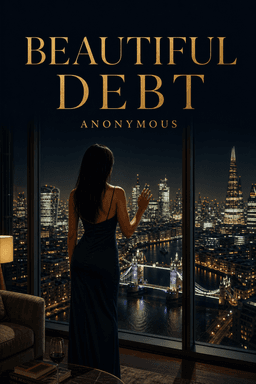
ReadRom Original
Beautiful Debt
Adrian Cross begins removing Elena's problems before she knows he's doing it. The book eventually forces her to reckon with the difference between being protected and being claimed — and her response is everything.
Read now →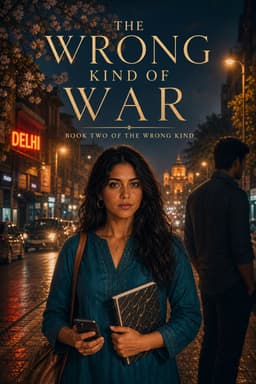
ReadRom Original
The Wrong Kind of War
Anika Sharma returns from captivity in Thailand with a revenge plan already running. The cartel setting and Delhi backdrop give this story atmosphere most English-language dark romance doesn't reach for.
Read now →FAQ
Frequently Asked Questions
Is dark romance the same as spicy romance?
No, and conflating them is one of the most common misreads of the genre. Spice level — the explicitness of intimate scenes — and darkness — the moral and emotional weight of the story — are completely separate dimensions. There is low-spice dark romance that deals entirely in psychological intensity without explicit content, and there is high-spice contemporary romance that is cheerful and sweet and not dark at all. Most popular dark romance in 2026 runs high on both axes simultaneously, which is probably why the conflation happens so often. But choosing a book based on spice alone and finding yourself in heavy moral territory is a mismatch you can avoid by understanding they're different questions to ask.
Does dark romance romanticize abuse?
The subgenre has done both — handled well and handled badly. The best dark romance examines power imbalance, obsession, and morally grey behaviour with genuine psychological weight, letting those dynamics complicate the story rather than papering over them. The worst dark romance uses the same tropes as decoration without consequence. The community is actively critical of books that fail that standard — reader threads on Goodreads, Reddit's r/RomanceBooks, and BookTok distinguish clearly between dark romance that interrogates its darkness and dark romance that merely aestheticises it. What the subgenre defends collectively is the fictional space to explore difficult dynamics — which is categorically different from endorsing those dynamics in real life.
What makes a hero 'dark' vs just a jerk?
The morally grey hero has internal consistency, a comprehensible worldview, and genuine transformation driven by the relationship. The jerk is a vehicle for the author's inability to create romantic tension through means other than cruelty, with no interiority and no earned arc. The clearest tells are in the heroine's experience — does she have full interiority and agency, or is she primarily a surface for the hero's behaviour to land on? And in the ending — does the HEA feel earned by what both characters have done and changed, or is the hero simply declared loveable because the plot requires it? Dark romance readers have been developing this taxonomy for years in community discussions. When they say 'this isn't dark romance, it's just an abusive relationship,' they're usually applying a nuanced checklist, not a knee-jerk reaction.
Where should someone new to dark romance start?
Start with a book where the darkness is on the emotional and psychological axis rather than the situational one — meaning the intensity comes from the complexity of the characters and their dynamic, rather than from extreme plot-level circumstances like captivity or organised crime. Age-gap dark romance and possessive-hero dark romance are both good entry points for this reason. On ReadRom, Marked in the Dark and Beautiful Debt both work well: they're dark on the emotional register, with full-agency heroines, without requiring readers to navigate the most extreme content warning territory first. Once you know what you love, the subgenre opens up quickly — there's enormous variety in how dark romance deploys its core dynamics, and most readers find a specific tone and intensity that works for them.
ReadRom
|A curated romance reading platform built for readers who take their fiction seriously · readrom.com