
The Mafia Romance Boom: What Readers Actually Want from a Villain Hero
My aunt found my Kindle at a wedding and asked why I like a bad man. This is the long answer.
My cousin's wedding, the one in Gurgaon with the terrible DJ, is where my aunt picked up my Kindle off the table and read the sentence sitting on the screen before the screensaver kicked in. It involved a man described as “dangerous in a way that made her want to be caught.” She looked at me the way you look at someone you've just discovered has a second, secret job.
“He is a criminal,” she said, with the satisfaction of someone who has just won an argument nobody was having. Then: “Why do you like him? He is a bad man.”
I didn't have a good answer that night, mostly because I was holding a plate of kebabs and she was still holding my Kindle hostage. But the question followed me home, and it's a fair one. It's also, as it turns out, the exact question mafia romance's biggest fandom spends an enormous amount of time answering for itself, in Reddit threads and Goodreads reviews and BookTok comment sections, with more precision than most outside coverage of the genre gives it credit for. Understanding that precision, and what it says about how readers actually engage with dangerous heroes, turned out to be a much bigger, better story than the one I was expecting to write when I sat down.
What a mafia hero actually is
Strip away the guns and the tailored suits and the shipping containers full of things you're not supposed to ask about, and the mafia hero is doing one specific job that no other romance archetype does quite the same way: he has to earn tenderness from a position of total power, without the story ever letting the reader forget he could, technically, do anything he wants.
A hero who was never capable of violence has nowhere interesting to go when he's gentle with the heroine. Gentleness cost him nothing. It was his only setting. A hero who has, in the same book, ended someone's evening rather violently and then spent forty minutes carefully re-braiding the heroine's hair because she mentioned once that her mother used to do that? That's not a contradiction the story is failing to resolve. That's the entire architecture of the trope. He is choosing tenderness, specifically for her, against every survival instinct his world has trained into him.
A pure hero has nowhere to go. A morally grey one has to choose her, over and over, and every choice is the whole seduction.
None of that changes the ending, and this part matters more than it sounds like it should. Mafia romance is still romance, which means it still delivers a happily ever after, full stop, no asterisk. That's not a cosmetic feature. It's the structural contract readers sign before they open the book, and it's a big part of why they can afford to go to genuinely dark places in the middle third without it curdling into something else. The HEA is what the darkness earns its meaning from.
If you want the genre's own origin story, it's sitting right there in the culture already, half a century old: Mario Puzo's The Godfather, and its most quoted line, the one about making a man an offer he “can't refuse.” Not a romance line. Vito Corleone was not being smitten. But the shape is already there, waiting for romance to pick it up: a man terrifying to the entire room, gentle only with the people he's chosen to protect. Romance took that shape, turned the volume up, slowed the burn down, and asked what happens if the person on the receiving end of all that devotion gets a say in it.
The heroine question
The laziest read of this genre, the one my aunt would probably reach for if I gave her the full series instead of just the one Kindle sentence, is that the heroine is passive. A woman things happen to. This misunderstands the actual books almost completely, and it's the second thing that surprised me when I went looking at what readers actually praise.
Take Anika Sharma, the throughline heroine across ReadRom's own Wrong Kind of series. She survives captivity by noticing everything: exits, camera angles, the exact moment fear turns into strategy. She doesn't wait to be rescued in The Wrong Kind of Silence, she plans her own escape with the calm precision of a psychology student who has decided, firmly, not to become anyone's victim. By The Wrong Kind of Power, she's not a bystander in Zayan's world at all, she's six weeks into mapping vulnerabilities inside his own network, discovering that the most dangerous person in the room might actually be her. And in The Wrong Kind of War, she comes home from Thailand with a revenge plan already running, dismantling the person who handed her to the wrong people with the patience of someone who's had months, not minutes, to think about it.
That's the pattern readers keep rewarding: a heroine whose circumstances are extreme, but whose agency inside those circumstances never shrinks. The danger amplifies the weight of her choices. It doesn't replace them.
The line question
Here's the part of this piece I almost didn't write, because it's the part my aunt is actually asking about underneath the Kindle comment: does mafia romance romanticize the thing it's depicting? Is reading about a man who runs a criminal empire and occasionally kills people the same, morally, as endorsing what he does?
The honest answer, the one the genre's own most devoted readers have been working out for years in review threads, is that the line isn't in the presence of violence or power imbalance at all. It's in whether the book is examining those dynamics or just decorating with them. A mafia romance that puts the heroine in real danger and then expects the reader to find the hero charming for having caused it, with no interiority given to her and no consequence given to him, is doing something worse and lazier than dark romance at its best.
There's also a fantasy-versus-reality distinction that mafia romance readers understand better than almost anyone accusing them of not understanding it. Reading about a possessive, dangerous hero is not the same as wanting one. Nobody assumes thriller readers want to be kidnapped. Mafia romance readers extend themselves the same basic courtesy and, understandably, resent having it denied.
What I actually found when I went looking
I expected, honestly, to find exactly what my aunt assumes is in these books: rivalry, a lot of very confident physical descriptions, feelings, more physical descriptions, an epilogue with a baby. That book absolutely exists, in volume, and readers will describe it to you themselves with a specificity that made me laugh out loud on a train. One widely upvoted thread on r/RomanceBooks laid the formula out so precisely it reads like satire: we're rivals, I hate you, but you're hot, I still hate you but let's have a great deal of rough sex about it, oh no I've caught feelings and he hasn't, dramatic separation, a kidnapping or a fake death or possibly both, reunion, more rough sex, the end, epilogue baby.
What surprised me was that the readers posting this weren't complaining to leave the genre. They were complaining because they love it and they've had that particular meal enough times to start asking, loudly and specifically, for something else alongside it. Not less danger. More room in between the plot points.
“I want to see the soft stuff, not just lust,” one reader wrote, in a thread that drew hundreds of replies. But the replies weren't just agreement. They were specific, almost architectural, about what the soft stuff actually looks like: the breakfast scene after the hostage negotiation. The hero teaching her to drive because she's bored and restless inside the compound he won't let her leave. The idea of him coming home from doing something terrible and making her tea before he'll let himself sit down, because he doesn't want the night to touch her too.
The lust is the price of admission. The softness is what keeps readers there.
So, the actual answer
Here's the part I owe my aunt directly instead of dancing around it for two thousand words: readers do not want the villain to become less dangerous. They want his danger to be selective, and they want the selectiveness to be earned, specific, and visible in small moments rather than declared in one big speech at the seventy percent mark. Not a softer hero. A hero whose softness is a decision he keeps making, in public, at cost to himself, only for her.
In a pure suspense novel, the tension is external: will they survive? In a mafia romance that actually clears the bar readers are describing, the tension is internal: will he choose her over his own nature, again, today, with nobody making him. The best scenes in the genre are rarely the shootouts. They're the moments after, the hero who stands in the shower too long after doing something terrible, the heroine who finds his weapons cache and doesn't flinch but asks him to keep one drawer in the bedroom for things that aren't lethal. That's what the soft stuff actually is. It isn't escapism from the darkness. It's evidence that the darkness hasn't won yet.
A field guide, for my aunt
If you're going to understand this genre instead of just side-eyeing it across a kebab table, it helps to know that “mafia hero” isn't one guy. These aren't just character types, they're different answers to the same question: what does it look like when a dangerous man loves someone?
The Reluctant Groom is magnificently rude until he's caught buying flowers. The Protector's love language is uninvited security detail, he doesn't ask if she wants a bodyguard, he becomes one. The Undercover Operative is all about the confession scene, running an angle that protects her while pretending to be someone else. The Reformed Enemy was her family's enemy and is, somehow, dismantling his own empire brick by brick because she asked him to be slightly better, and infuriatingly, he listened.
None of these archetypes are new. What's new is how precisely readers can now name what they want inside them, and how little patience is left for a hero who's dangerous in general but not specific about who he's soft for.
2026 H1 Picks
Also worth reading
Some links below are Amazon affiliate links. ReadRom earns a small commission at no extra cost to you.
Obsessive Hero · Dark Romance
My Dreadful Darling
H.D. Carlton · Hollow Graves Duet #1
Carlton's signature obsessive hero at full intensity, psychologically dense and morally unsparing. The heroine never loses her own interiority, even at the outer edge of what the hero is willing to do to keep her.
Vibe: Obsessive · Psychological · Intense · Spice: 🌶🌶🌶🌶🌶 · CW: Obsession, captivity, violence
Buy on AmazonMafia Romance · Age Gap
Frozen Heart
Neva Altaj · Perfectly Imperfect #12
The arranged marriage entry readers keep pointing to for getting the power imbalance right, examining it honestly instead of glossing past it. The mafia world Altaj has built deepens with every book in the series.
Vibe: Slow Burn · Arranged Marriage · Mafia · Spice: 🌶🌶🌶🌶 · CW: Power imbalance, arranged marriage, violence
Buy on AmazonVillain Romance · Mafia
Hunt the Villain
Rina Kent · Kiss the Villain #2
A darker, higher-stakes entry in Kent's villain romance catalogue, with a redemption arc that takes its time and earns the ending rather than rushing to it.
Vibe: Villain Romance · Rivals · Mafia · Spice: 🌶🌶🌶🌶 · CW: Morally grey hero, violence, organized crime
Buy on AmazonDark Age Gap · Billionaire Romance
The Auction
Sadie Kincaid · Wages of Sin #1
Beauty and the Beast by way of organized crime, handled with more structural intelligence than the premise usually gets. The danger and the age gap both feel consequential rather than decorative.
Vibe: Age Gap · Captive Romance · Slow Burn · Spice: 🌶🌶🌶🌶🌶 · CW: Age gap, coercion, auction premise, violence
Buy on AmazonOn ReadRom
What I'd hand my aunt, if she asked again
All three by Kiran Vashisht, ReadRom's most requested name for exactly the reason this piece exists.
ReadRom Original
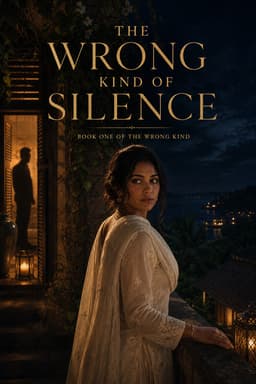
The Wrong Kind of Silence
Anika Sharma survives by noticing everything: exits, camera angles, the exact moment fear turns into strategy. Taken off a Delhi street by mistake and hidden in a villa in Thailand, she plans her own escape — until Zayan starts treating her like the only person in the room worth listening to.
Read now →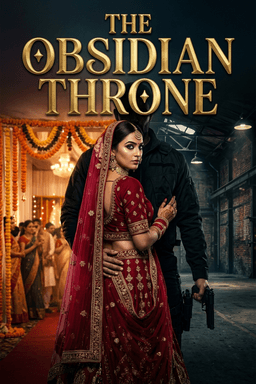
ReadRom Original
The Obsidian Throne
She married him because he was boring. Safe. Then men took her off a Delhi street, and the husband she'd assumed was unremarkable turned out to be a black-ops operative who killed seven people to bring her home.
Read now →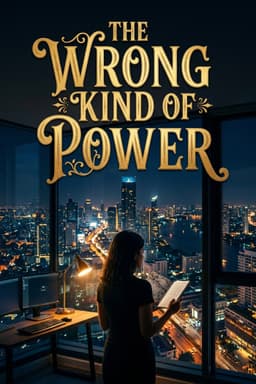
ReadRom Original
The Wrong Kind of Power
Six weeks into mapping vulnerabilities inside Zayan's Bangkok network, Anika discovers the most dangerous thing in the room isn't him — it's the version of herself who turns out to be very, very good at this.
Read now →On ReadRom
Read These Next
ReadRom Original
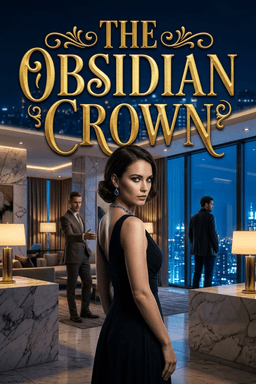
The Obsidian Crown
Sent to infiltrate a criminal empire and get close to the man at its center, she wasn't trained for the version of this where she starts to mean it. The next chapter of the Obsidian Throne story.
Read now →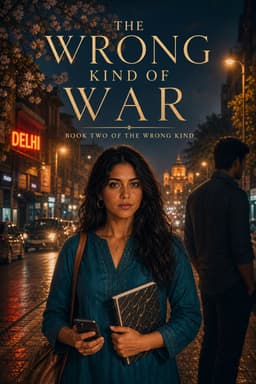
ReadRom Original
The Wrong Kind of War
Anika Sharma comes home from Thailand with a revenge plan already running, and a man in Delhi who arrives with a gun and no explanation exactly when the trap finally closes.
Read now →
ReadRom Original
Beautiful Debt
Adrian Cross begins removing Elena's problems before she knows he's doing it. For readers who want the Protector archetype pushed to its most complicated edge.
Read now →FAQ
Frequently Asked Questions
Is mafia romance just lust, or is there actual romance in it?
Depends entirely on the book, which is really the whole point of this piece. Readers report real fatigue with mafia romances that lean almost entirely on rivalry-driven heat with no emotional scaffolding underneath. The books that get recommended most consistently, the ones readers actually reread, are the ones that pair the danger with real courtship: small gestures, real patience, protectiveness that shows up in ordinary moments and not just in a dramatic rescue scene.
Does mafia romance romanticize violence and crime?
The subgenre has done both, handled well and handled badly, and readers are the first to say so. The best mafia romance examines power imbalance and morally grey behaviour with real psychological weight, letting those dynamics complicate the story rather than papering over them with a good jawline. The worst mafia romance uses the same tropes as decoration without consequence. What the genre defends is the fictional space to explore difficult dynamics, which is categorically different from endorsing them in real life.
What actually separates a good mafia hero from a generic alpha hero?
Specificity, and readers will tell you this themselves if you ask. The boss who is short with his entire organization and strangely patient only with her. The man who notices she's cooked dinner and feels genuinely guilty for missing it. Generic alpha posturing reads flat on the page. Small, specific devotion is what gets screenshotted and sent to the group chat. The clearest tell is also structural: does the heroine have full interiority and her own agenda, or is she primarily a surface for the hero's behaviour to land on?
Is dark and mafia romance actually going mainstream, or is this just a passing BookTok trend?
Industry watchers have pointed to 2026 specifically as the year it moves from a specialized indie category into the broader publishing mainstream, driven by sustained reader demand rather than a single viral cycle. Arranged marriage remains the dominant trope of the moment, particularly inside mafia romance, and the growth has outlasted the wave of short-form video that first put it in front of a wider audience, which is usually the clearest sign a trend has become a permanent shelf category.
What I'd actually tell her
If my aunt asked me again, at the next wedding, over worse music, with my Kindle safely zipped in my bag this time, I think I'd say this:
I don't like him because he's a bad man. I like him because he's a bad man who is trying, in the only language he knows, to be good for her. The trying is the romance. The failure, sometimes, is the romance too. If he were simply gentle, it would mean nothing. That he is capable of terrible things and still chooses to braid her hair, to buy her flowers, to stand in the shower until the hot water runs out, that means everything.
The mafia romance boom isn't about wanting criminals. It's about wanting proof that change is possible, that nature isn't destiny, that love can reroute even the most dangerous man into something like softness. Not permanent softness. Not perfect softness. Real, effortful, costly tenderness, offered by someone who knows exactly how much it costs him to offer it.
She'd probably still look at me strangely. But at least this time, I'd have an answer.
ReadRom
|Curated dark, contemporary, and paranormal romance for readers who want the whole range, from soft-burn to inferno · readrom.com